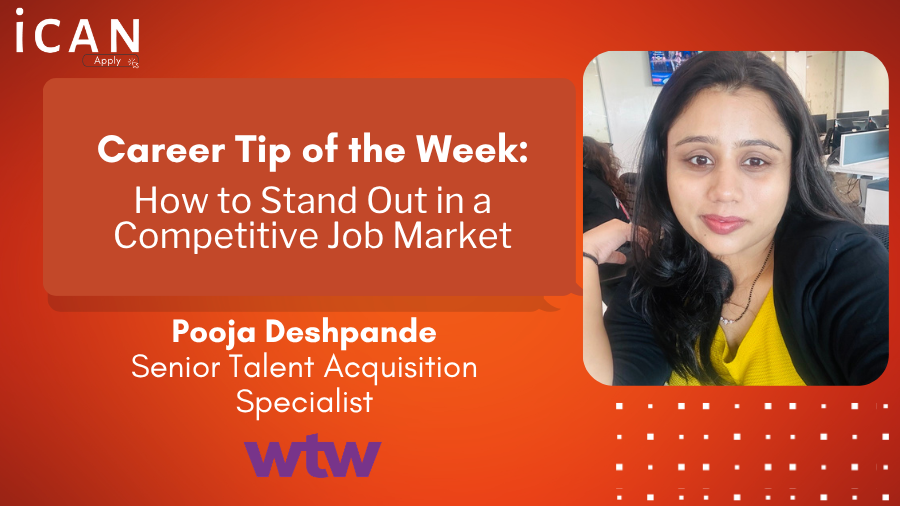
How to Make Your Application More Memorable: Career Advice from Recruiter Pooja Deshpande
When competition for roles is high, it is easy to assume that the candidate with the most experience, the longest CV or the biggest list of qualifications will have the advantage.
But employers are not simply looking for the person who has done the most. They are looking for people who can demonstrate where they can add value, learn quickly and adapt as businesses and roles continue to change.
According to recruiter Pooja Deshpande, standing out starts with being more intentional about how you present yourself. From tailoring your CV and showing tangible achievements to building genuine relationships, small changes in your approach can make it much easier for an employer to understand why you could be right for the role.
Make Your CV Relevant, Not Generic
One CV should not be expected to work for every application.
Before applying, take time to understand what the employer is actually asking for. Look at the skills, experience and responsibilities highlighted in the job description, then make sure the most relevant parts of your background are easy to identify.
Pooja warns that generic or overcrowded CVs can quickly blend into a large pool of similar applications. Strong applications are not necessarily the ones with the most elaborate design or the highest number of keywords. They are the ones that make the candidate's suitability clear.
This is increasingly important as technology becomes more involved in recruitment. Applications can be assessed against the requirements of a role before reaching a recruiter, making relevance and clarity even more important.
Tailoring your CV does not mean rewriting your entire career history for every application. It means making sure the information most relevant to that particular opportunity gets the attention it deserves.
Show the Difference You Made
One of the easiest ways to strengthen a CV is to move beyond simply listing responsibilities.
Many candidates can describe what they were expected to do in a role. Far fewer clearly explain what they achieved while doing it.
Think about the outcomes behind your work. Did you improve a process, increase engagement, support revenue growth, deliver a project, strengthen a client relationship or solve a recurring problem?
Where possible, use evidence to make that impact clearer. Even a simple metric, result or example can help turn a generic responsibility into something much more memorable.
The goal is not to fill your CV with numbers for the sake of it. It is to give an employer a clearer picture of the value you have already created and what you might be capable of doing for them.
Build Relationships Before You Need Them
A job search should not begin and end with submitting applications.
Pooja highlights the importance of building genuine professional relationships, particularly through platforms such as LinkedIn. Conversations, referrals and connections can expose you to opportunities that may never appear through a traditional job search.
That means using LinkedIn as more than somewhere to browse vacancies.
Follow people and organisations in areas that interest you. Engage thoughtfully with their content. Share your own perspective when you have something useful to contribute. Attend events, webinars and industry sessions where you can meet people and learn more about the market.
The strongest networks are built over time. Approaching networking as an opportunity to learn, contribute and stay connected will usually be far more valuable than only reaching out when you need a job.
Moving Into Insurance? Start With What You Already Bring
For anyone considering a career change into insurance, Pooja recommends getting clear on what you actually want before deciding where to apply.
Insurance is a broad industry, with careers spanning underwriting, broking, claims, operations, technology, finance, marketing and many other areas. Understanding which type of work interests you can make the transition much easier to navigate.
It is also important not to dismiss the experience you have already built.
For many roles, previous insurance experience is not essential. Skills developed elsewhere, such as relationship management, analysis, communication, sales, problem solving, project management or customer service, can all be highly transferable.
The key is being able to explain that connection clearly. Rather than focusing on what you have not done before, show an employer how your existing skills could help you succeed in their environment.
Learn Enough to Show You Are Serious
You do not need to become an insurance expert before applying for your first role in the industry.
You should, however, demonstrate that you have taken the time to understand the sector you want to join.
Webinars, industry events, workshops and short courses can help you become more familiar with how insurance works, the language used across the market and the different career paths available.
This does more than build knowledge. It shows intent.
Once you make the move, stay open-minded about where the experience might lead. Your first role is a starting point, not a final destination. Use it to learn from colleagues, explore different parts of the business and understand which areas you want to develop further.
You Do Not Need to Be Perfect, You Need to Be Intentional
Standing out does not mean trying to become the perfect candidate for every role.
It means making deliberate choices about the opportunities you pursue, how you present your experience and what you are doing to keep developing.
As Pooja puts it, the candidate who gets the interview is not always the most qualified person on paper. Often, it is the person who has done the best job of showing why their experience, skills and ambitions fit the opportunity in front of them.
Tailor your application. Be clear about your impact. Build genuine relationships. Keep learning.
Those habits will not just help you through your next job search. They can strengthen the way you approach your career over the long term.
Visit www.icanapply.uk for more job listings, recruiter insights, and practical career advice.