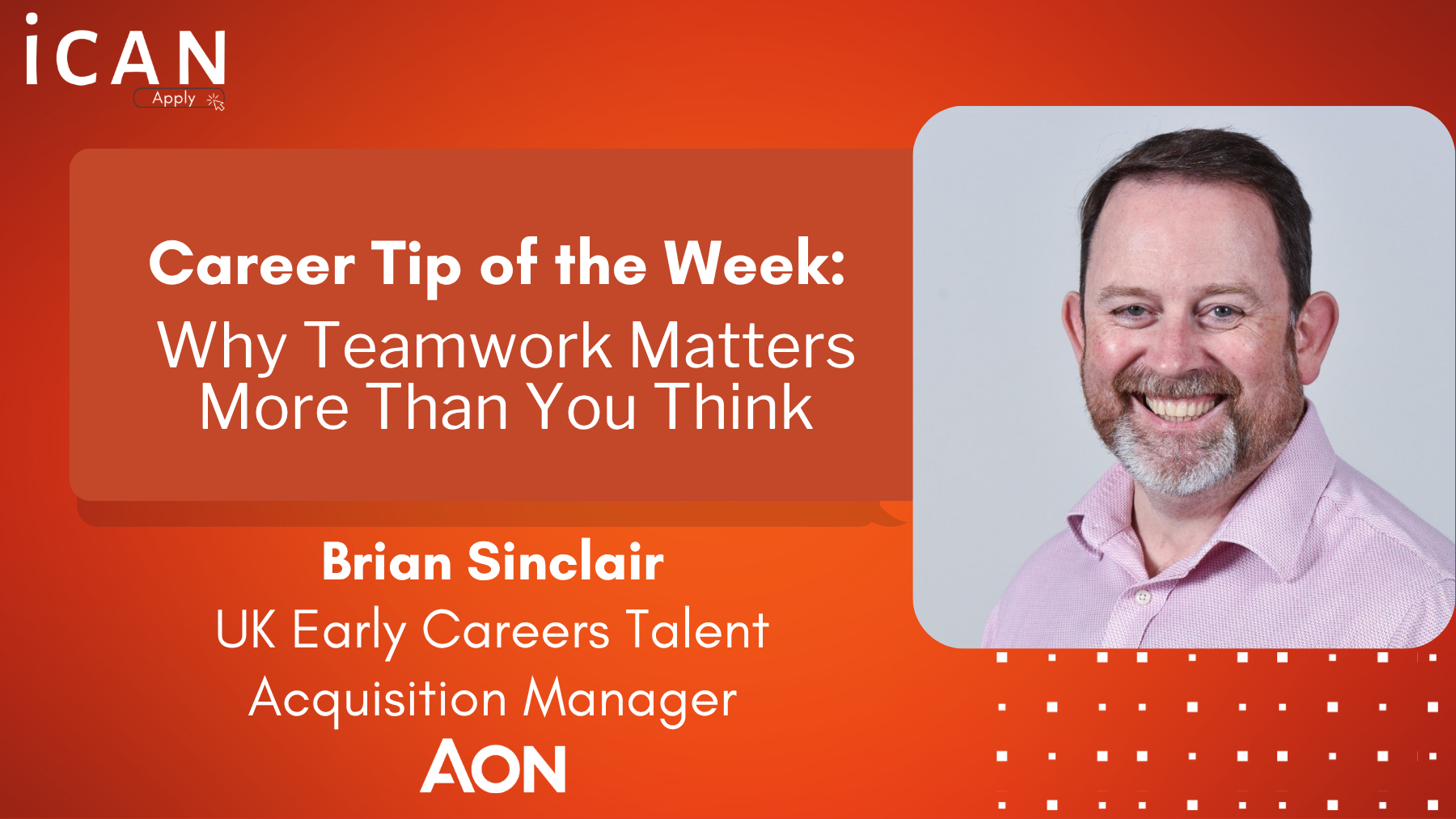
People Don't Succeed in Isolation: Career Advice from Aon's Brian Sinclair
Recently, Brian Sinclair, UK Early Careers Talent Acquisition Manager at Aon, was providing feedback to candidates following an assessment centre. One of the most common areas for development? Group exercises.
For many candidates, group exercises can feel like one of the most challenging parts of the recruitment process. However, Brian believes they are also one of the most important.
Why? Because an individual's ability to build relationships, collaborate effectively, integrate into teams and contribute towards a shared success is one of the strongest predictors of long-term career success. Not just in terms of performance, but also progression, engagement and retention.
What Are Employers Looking For?
At an early careers level, employers are typically evaluating candidates on a range of skills that go far beyond technical knowledge.
These often include:
• Communication and influencing skills
• Collaboration and engagement
• Diversity and inclusion
• Relationship building
• Adaptability to group dynamics
• Achieving a shared success
According to Brian, these are foundational capabilities that determine how quickly someone can access information, navigate an organisation, build relationships, gain credibility and contribute meaningfully.
In other words, employers aren't simply assessing whether you can complete the task. They're assessing how you work with others whilst doing it.
Why Teamwork Continues to Matter After Recruitment
The importance of collaboration doesn't end once someone secures a role.
Brian explains that many organisations actively invest in helping early career professionals build these skills from day one.
This often includes:
- Creating opportunities for new joiners to build relationships and trust early.
- Developing a strong cohort identity, helping individuals feel connected and supported as they begin their careers.
- Introducing key stakeholders and networks so new hires understand how work gets done across the organisation.
- Reinforcing behaviours such as collaboration, curiosity and openness alongside technical development.
- Providing mentoring, buddying and cross-team exposure to strengthen professional relationships.
These initiatives recognise that strong networks and relationships are often key drivers of confidence, resilience and performance.
How Can Students Build These Skills?
The good news is that these capabilities can be developed long before entering the workplace.
Brian encourages students and aspiring professionals to actively seek opportunities to work with others and build their interpersonal skills.
Some ways to do this include:
• Getting involved in societies, sports teams or academic projects
• Taking on positions of responsibility, such as leading projects or organising events
• Seeking feedback from peers, mentors and colleagues
• Working with people from different backgrounds and perspectives
• Practising professional communication through presentations, debates or part-time work
These experiences can play a significant role in helping individuals integrate successfully into teams and organisations later in their careers.
People Succeed Through Others
Brian's advice is simple: group exercises matter because people don't succeed in isolation.
Success is often built through relationships, collaboration and the ability to work effectively with others.
For candidates preparing for assessment centres, it's worth remembering that employers aren't necessarily looking for the loudest person in the room. They're looking for people who can listen, contribute, adapt and help a group achieve a positive outcome together.
As Brian puts it:
"There's a big difference between being a good worker and someone who's good to work with."
Visit www.icanapply.uk for more job listings, recruiter insights, and practical career advice.